What to Look for in Portable Storage Container Manufacturers

Buying the correct portable storage container will roughly depend on your preference. Not all our containers are the same; instead, they differ in structure, reliability, cost, and mobility.

Making the wrong decision could have an effect on the amount of storage and versatility your storage container offers, preventing you from using our storage containers as efficiently as possible. Here’s what to look for in a portable storage container so that you can make the most of your long-term self-storage investment:

Situations Where It Makes Sense to Invest in Portable Storage Containers

Starting a Moving Company or Storage Company That Uses Pods

Mobile containers can significantly improve customer parcels’ transportation from one location to another as they’re easy to load into trucks. Furthermore, they are made from durable materials, making these containers difficult to penetrate and guaranteeing optimal security and stability to the customer’s belongings.

Expanding a Moving or Storage Company

Investing in storage containers can provide more space to store client goods and items. With the extra capacity, your storage business has more room to hold goods, ultimately increasing revenue and creating room for expansion. It also takes away the need to pay expensive rent on large storage units, allowing you to fund your storage business’s upscaling. Portable containers provide the flexibility you need to carry out local, national, and even international cargo transportation.

Long-Term Onsite Storage

For onsite construction or renovation projects, purchasing a portable container can provide cheaper storage, making it more affordable over time than if you rented the container from another company. Onsite containers alleviate unnecessary fuel, effort and delivery expenses associated with offsite warehouse storage.

Other Uses of Portable Storage Containers

Storing Belongings During Remodeling

Storage containers are ideal for containing your belongings during home renovations. They provide ample space and security to protect your items. Stainless steel containers are sturdy and preserve your stuff away from paints, water, dust, cement, and poor weather that can ruin your possessions during the renovation.

Water Damage Remediation

A leaky pipe or damaged valve can flood your home, causing mold growth, rot, and furniture damage. Our storage containers are comprised of steel galvanized smooth boxes that are rust-resistant, making them ideal for use during home water remediation. Our portable containers’ corrugated walls reinforce their durability and waterproofing properties, keeping your sensitive items safe from water damage.

What to Look for in a Portable Storage Container Manufacturer Before Buying

Years of Experience

​Always opt to purchase a storage container from a reputable and reliable manufacturer. Ideally, you’ll want to seek out those with several years of experience as the level of quality is incomparable to those with the least amount of experience.

Check if They Have a U.S.-based Assembly

A storage container manufacturer with a local assembly plant will make it easy for you to access the available container options. Furthermore, you will have first-hand insight into the structural integrity and quality of the containers produced.

Do They Provide Repair Services?

Containers, such as stainless steel, while made for long-term use, gradually wear down in time and need repair. Manufacturers that provide repairs make it easy to maintain and modify your container as you see fit.

​Different Types Of Portable Storage Containers Available

Portable storage containers come in two main varieties, which include:

  • Standard containers – These variants are 8 feet tall and come in different sizes, such as 20, 40, and 45 feet in length.
  • High-cube containers – These containers offer more space and are significantly larger than the standard type.

Both portable storage containers feature two main doors. Roll-up doors are light but provide poor protection against water. Swing-out doors are tough and provide excellent security against break-ins and rodent infestations. Moreover, these storage boxes are made up of plywood or metal floors. Depending on your preference, you may opt for wood floors that are waterproof or durable metal flooring that can accommodate heavy weight without breaking.

Our portable containers are ideal for both long and short-term storage. We provide cost-effective and self-storage solutions to enhance businesses and individuals with adequate space and flexibility.

How to Declutter Your House

Decluttering your house is a task many of us undertake at least once throughout the year, and at the end of the decluttering process, it is rewarding to see your fresh, clean space. One way to help the decluttering process is to use a portable storage box as a “holding area” for the items you are removing from your home. While decluttering, don’t overthink the process when you are deciding whether to keep or remove an item. Throughout the decluttering process, you should take it slow and work on one area at a time. Take time to research decluttering tricks and techniques so you can declutter your house with ease.

How to Start Your Own Storage Company

How to Start Your Own Storage Company

Starting any kind of business can be intimidating. There are laws and market analyses and finances and taxes and inventory and profit and loss and so much more. Where do you even begin? If you want to know how to start your own storage company, take a deep breath and relax because you’ve come to the right place. We’re going to walk you through the process from start to finish.

There are lots of steps to starting your own storage business, and we’ll get to them all. However, let’s take a look at the big picture first. There are three parts to this whole process: Planning, Getting Started, and Expanding.

storage facility

Part I: Planning it all out

It may not be the most exciting part of starting a business, but it is one of the most important. The planning phase happens at the very beginning because you need to know some basic things about what you want to do and the market you want to do it in. Otherwise, you’re flying blind, and you might make costly mistakes that can easily be avoided.

Step 1 – Stating your goal

Before you do anything else, figure out what kind of company you want to own. Are you looking for a small, local affair that gives you enough income for a comfortable life? You want to work, but you don’t want anything to take over your life, so to speak. Or, are you looking for something that you can grow significantly? You won’t stop until you are the storage king.

Everything else you do will depend on this decision. Once you know what you want, you need to know if it will work.

Step 2 – Market research

Let’s get one thing clear right now: Research matters. You need to figure out the lay of the land, and we mean that literally. Storage businesses, whether mobile or permanent (more on that later), need land. You can’t just rent some office space and call it a day. You need room to roam.

Market research involves figuring out how much demand there is for the product you want to sell in a particular area. In this case, the product is storage space, so some helpful things to know will be how many other storage businesses are in your area and what their rate of occupancy is. In other words, how many competitors do you have and how much of their space is rented out?

Figuring out what your competitors are doing and how likely your business is to succeed will give you a good idea of what to expect and what you should do with your own business.

You also should think about joining the Self Storage Association. They have lots of helpful information to offer and are storage company advocates in state governments.

Step 3 – Calculating costs

Determining what your costs will be is tricky. You’ll need to take into account many factors including the price of land, buildings, labor, etc. In order to do this, you’ll need to know not only the things from step one but also what kind of storage company you want to own.

Mobile vs permanent storage 
Put simply, permanent storage involves storing items inside a standing building while mobile storage involves storing items inside mobile storage containers. The permanent option is the one most people are familiar with, meaning the large buildings with many units which are accessed through sliding garage-style doors.

Despite its being less common, mobile storage is a highly viable type of storage. In fact, mobile storage units are often a better option for both business owners and clients because the mobile storage containers are usually dropped off via truck and picked back up again when the client is done filling them. That means some costs are lowered, not the least of which being that the land needed for this type of business can be further away from hubs of activity, so land prices are usually lower.

You’ll need to decide which type of storage company you plan to start and then calculate the costs accordingly. You can use this nifty cost calculator to get a rough idea of what your expenses will be.

Step 4 – Writing a business plan

Once you have all of the relevant information, start writing your business plan. A business plan is a formalized version of all the aspects that you’ve done so far. You’ll want to include the nature, size, and services of your business and any research you’ve done that shows why your business is likely to be successful. If you feel nervous about writing a business plan, look at some examples online.

One important part that you’ll need to cover is the structure of your business. In other words, are you going to be a Limited Liability Company (LLC), a sole proprietorship, or a corporation? Most entrepreneurs will choose to be an LLC, but be sure to consult an expert like an attorney or an accountant so that you make the right choice.

Part II: Getting Started

We can now move on to the second phase of getting your storage business off the ground. This part will be where the rubber meets the road and your company becomes a reality.

Step 1 – Financing

You’ll need to get your hands on enough money to actually get the ball rolling. The most common form of funding for starting a business is a small business loan, and banks that offer these loans will ask you for a business plan, which you already have. You may also look for other sources of funds like private investors. However, especially if this is your first time to start a business, a small business loan will likely be your best bet.

Step 2 – Buying and Building

Once you have secured funding, it’s time to start buying supplies and building facilities. If you are starting a permanent storage business, you’ll need to get your buildings up and running. If you are starting a mobile storage business, you’ll need to buy mobile storage containers and a way to transport them. You’ll need to buy land for both.

There are also plenty of other, smaller things that you’ll need like business cards, advertising materials (see next step), and templates for forms. However, these things are small potatoes compared to the actual storage containers.

Step 3 – Marketing and Attracting Customers

You’ve got a great business up and running. Now, you need customers, preferably lots of them. To that end, you’ll need to start marketing. There are plenty of options for this including newspapers, billboards, websites, and everything in between. Because your business is still new, you should start with the most reliable methods that have the lowest costs.

An online presence is crucial to doing business these days, and social networking sites, like Facebook, are a great way to reach lots of people for relatively small amounts of money. You can put all of your information on a Facebook page without having to pay the cost of building and hosting a website. Though you’ll want to eventually cast a wide net and use many different marketing forms to reach a diverse audience, starting with social media is a good first step.

Part III: Expanding

You’ve done so well with your first storage company that you want to expand to new locations or upgrade your current location. While you’ll largely be repeating the process you went through the first time, some important new septs need to be taken.

Step 1 – Reassessing

The first step in your expansion project is to figure out exactly if your business is ready for expansion. Look at your company with a fresh eye to be sure that it is stable enough for you to risk expanding.

Things may go well on a day-to-day basis, but you’ll need to have people you can trust to take care of things while you work on getting another location up and running. In short, reassess your business to see if it can weather the storm of expansion.

Step 2 – Scaling

There are big jumps when expanding your business. Increases in costs, the need to hire more employees, and your attention being split among more places all make the list. The term for making a small business larger while keeping it profitable is “scalability.” Ensuring scalability is more complicated than you might think.

For one, you’ll have to pay close attention to your bottom line and be sure that it can support another, less successful business for a while. You also may need different prices and practices in the new location because the market will be different. A good rule of thumb is to keep the core of your business but be open to changing everything else.

So, stay committed to the things that make your company what it is, but be willing to shake up organizational structures, prices, and branding to make your new locations successful. Be sure to talk to your lawyer and accountant about this idea because your legal obligations will also likely change.

Step 3 – Lather, rinse, repeat

Once you’ve ironed out the scalability kinks, start at Part I, Step 1 and do the whole thing over again. Decide what your goals are, do the research, make a plan, and put that plan into action!

Conclusion

Starting a business is complicated, but it’s not impossible. After all, people do it every day. If you want to start your own storage company, there’s no time like the present. The information here should help you bring your idea into the world. So, what are you waiting for?

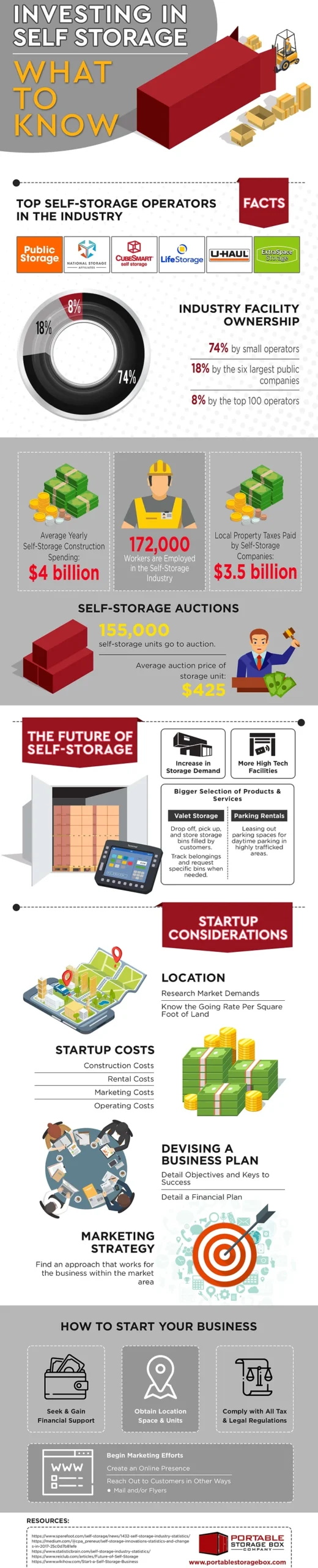
Investing In Self Storage

Public Storage, U-Haul, ExtraSpace – these are a few of the biggest names in self-storage that you’ve probably heard of, but do you realize that 74% of facilities are owned by small operators? So, if you’re looking to invest in this industry, you’re in luck. Storage demand is projected to increase exponentially, and advances in technology will make storing personal belongings easier than ever for your customers.

In our infographic, you’ll not only find information about the current market, but also the tools you need to fund your startup, devise a business plan, and formulate a marketing strategy so your storage business will stand out amongst the competition.

The World Of Self Storage

When it comes to the success of the storage industry, there’s definitely no sign of it slowing down. Indeed, despite slow progress in the housing industry, Americans are still in need of portable storage units for a variety of reasons, which accounts for a healthy 7% annual growth in the self-storage industry. So, for those who wish to invest in this market or open their own self-storage business, you’re making a good call! To expand on some of the facts and figures, the Portable Storage Box Company has provided a helpful list of statistics that illustrate just how profitable the industry has become, as well as some detailed diagrams of average storage unit sizes, how much they cost, and their distribution percentage across the country.

The Ultimate Guide to Self-Storage

There comes a time in every adult’s life when they will need extra storage space. The Ultimate Guide to Self-Storage will help you choose the best storage options based on your needs. The average costs of storage units are about $90; however, based on what you’re storing, this number can be higher or lower. It’s also a good idea to know storage statistics and tips before you start. The points listed below will provide information on how much to spend on storage per square foot per month as well as planning measures to help store your items properly. Storing items is a daily part of life for many, so make sure that you have the right tools you need for self-storage.

ultimate guide to self storage

Portable Storage vs. Self-Storage

When moving or simply needing storage, two of the most popular options are portable storage containers and self-storage facilities. Portable storage containers are delivered to a location, packed, and taken to another location, and self-storage facilities are buildings where you rent an area to hold your items. Portable storage is ideal for short-term time frames or long-distance moves, and self-storage is beneficial when you need a long-term solution or are staying in the nearby area. Take time to learn about the differences between portable storage containers and self-storage options so you can determine which is the best choice for you.

Packing Hacks for Your Move

Regardless if you are moving across town or across the country, the process of moving usually feels tedious and exhausting. If moving stresses you out, you are not alone. According to a survey of 2000 people, 60% of respondents cited moving as the most stressful event of their lives, surpassing even divorce and breakups. But it doesn’t have to be. With proper planning, and thorough research, there is enough advice out there to help smooth the transition. So if you’re struggling to decide if you should move DIY or call professionals, or what to do with your old clutter, check out some of the tips below.

Self-Storage Trends of 2019

Recently a group of executives in the self-storage industry got together in New York and Colorado to talk about market trends and the general outlook for self-storage. The following are some of the trends they discussed and what they expect to see in the self-storage industry in 2019.

red door

The General Outlook is Good

The economy in general is doing well, and this is expected to continue through 2019. Most of those in the self-storage business are optimistic that business will remain good for the remainder of the year. During the past several years there has been a boom in the self-storage industry, both portable and brick and mortar storage. This has coincided with an economy that, overall, has been robust and seen growth in many different sectors. During the last year, however, construction in the self-storage industry has slowed slightly and both owners and developers will need to keep this in mind when creating and adjusting their business plans through the rest of the year and beyond.

The Need to Understand Private Verses the Public Sector

Private business has been and will continue to be the major source of income for self-storage units. With record low unemployment rates, the economy is currently supporting more business expansion. This will likely mean private business will be a lucrative area that those in the self-storage industry can focus on. Self-storage is a cost-effective option for most business owners when compared with the costs of retail or office rents. Owners will need to make private business a priority when creating their marketing and overall development plans, while still keeping in mind the needs of individuals who are in the market for self-storage.

The Importance of Valet Self-Storage

Valet self-storage is one of the hottest trends in the storage market. Companies that provide this type of service will pick up their customers’ items from their office, warehouse or home. This type of service is also referred to as full-service self-storage or private storage. Both businesses and individuals are often willing to pay more for the ease and convenience of these types of prime services. This type of service often provides other extras such as wrapping, professionally packing the items, and providing special care for fragile items. Transporting items can be expensive and time consuming, making valet self-storage an incredibly lucrative niche market for some owners. These customers are also often interested in climate-controlled storage as well. These are specialty areas that developers and owners can focus on if they want to provide top of the line services to high-paying customers.

Management Styles are Changing

There have been fewer mom-and-pop self-storage owners in recent years and that has changed the face of the self-storage industry. With an increase of larger companies and developers came a more professional type of management that didn’t provide as much interaction with customers as before. The 10 largest companies in the industry currently have 32 percent of the market share. Having 3 to 100 stores is considered mid-sized, and there are hundreds of operators that fall into this category. Approximately 26,000 owners are currently operating a single facility. No matter what the size of the company, during the last few years more self-storage owners have become more hands-on and have been providing a lot more options for their customers. Whether it’s on-site or helping customers with portable storage, the need for this type of management style will likely continue into 2019 and beyond.

Customer Service is Evolving

There has historically been little to no customer service in many of the self-storage units of the past. This has been especially true of large and mid-size companies. The most successful large or mid-size storage companies will be those that provide many services in a professional manner while still being able to connect to the customer like a small business owner. Better customer service, along with a variety of ancillary services, is now one of the main priorities for those looking for self-storage units. Ancillary items that consumers want and many facilities are providing include moving vehicle rentals, moving supplies, and a variety of boxes. Even selling insurance and car wash facilities are products that self-storage owners are offering their customers. Companies being able to integrate personal customer service, such as helping individuals choose the right portable storage unit for their property, will continue to be driving forces in the self-storage industry. While engaging in higher levels of interaction with their customers and providing convenience and individualization, owners will also have to balance an increasing amount of automation and technology.

There is Increased Automation

Technology is advancing at a rapid rate, and the self-storage industry is taking full advantage of increased automation. This means that some self-storage units may not need a full-time property manager. An automated or partially automated property will eliminate the need for constant supervision. This will save a company money by eliminating the full-time salary and benefits of a property manager. There are downsides, however, that a company will have to keep in mind. For starters, an automated system will likely not be able to up-sell to customers as effectively as an employee working on-site. The same goes for selling ancillary items such as insurance or boxes. An owner will have to figure out whether cutting costs by not having a salaried individual on site is worth the loss of up-sells and ancillary items. If those things are not something that a company makes much money on, it may be worth it to have as much automation as possible.

Self Storage 2019 Self storage

Facilities Have Changed

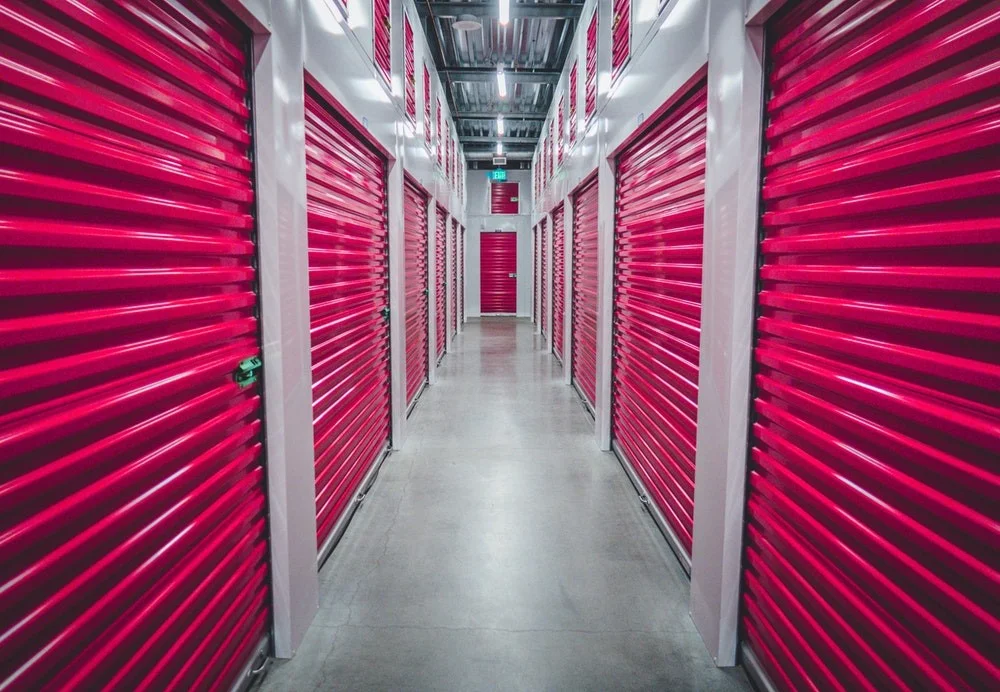
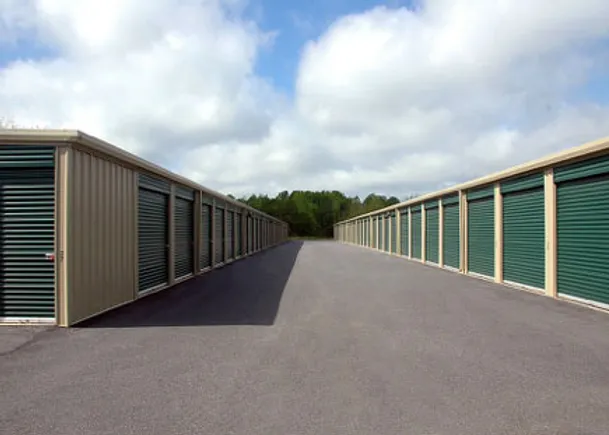
Self-storage facilities of the past have primarily all looked the same. They would usually include several rows of single story buildings made of metal and painted orange. Self-storage units have come a long way from this type of look. Today they often resemble the type of buildings and styles that are in the surrounding neighborhood. Many units now feature upscale exterior designs and beautiful architecture. Attractive self-storage facilities that fit into the current landscape and architecture of the neighborhood is almost certain to continue, and may even be a necessity in some areas. In recent years more lawsuits and angry neighborhood associations have tried to stop the construction of self-storage units near their homes. Building attractive buildings and landscaping is a way to adapt and earn the approval of the surrounding neighborhoods. Developers will need to do a more careful analysis of the areas where they hope to build so their units will fit in well with the surrounding buildings and landscape. This will include designing attractive portable storage units that blend nicely into neighborhoods.

Portable Storage Options

Just as facilities have evolved, so have the methods for storing items. Portable storage provides customers with the ease and convenience of having a storage unit on their property. Portable storage can be used to store everything from household and seasonal items to garden supplies and tools and materials that may be needed when a customer is working on a remodeling project. Portable storage units come in a variety of sizes and can be kept on the customer’s property for only a few days or as long as they’re renting the storage unit. Owners that want to offer this option will need to make sure they have enough staff and vehicles to transport the storage units. It will also be necessary to have enough space to store the units if and when customers decide they no longer want the units on their property. It’s also important to understand the demographic owners are marketing to. Those in rural areas would likely want larger portable units while those in the city or suburbs would need smaller ones. Different types of permits and insurance will be needed when transporting storage units.

The Importance of Both Millennials & Boomers

Using technology in the self-storage sector will allow owners to attract more Millennials. This demographic is accustomed to accessing all types of services online through apps. Self-storage will be no exception. Self-storage companies that have attractive, easy to use apps will gain an advantage in this area of the market.
While self-storage companies will want to pay close attention to Millennials, Baby Boomers will continue to be very important. It’s estimated that approximately 10,000 Boomers turn 65 each day. This is expected to continue for at least 15 years. This means that tens of thousands of individuals and couples will be downsizing for many years to come. This also means that self-storage companies will want to continue to market to this group and pay attention to the types of things they are looking for. Downsizing is one of the biggest reasons that people look for and use self-storage units. Sometimes those who are downsizing will want portable storage units that can be kept on their property for easy access to their items.

Financing Will Likely Remain Stable

The 10-Year Treasury went over 3 percent in 2018, but with it recently dropping it’s providing a good start for 2019. The debt market is currently competitive and offering a variety of options for investors. With the values and cap rates in most markets not expected to compress any further, the storage industry is expected to grow at a sustainable pace throughout 2019. Sellers, however, shouldn’t hold out too long because the investment market will likely turn downward at some point.

There Will Likely be More Lease Up Deals

Certificate of Occupancy deals, or what is known as C of O deals, are pretty much a thing of the past. This was a short-lived real estate trend that may have worked out well for those who sold one. During the last year, however, less than five of these types of deals closed nationwide. With the costs of construction increasing, expensive entitlements, and higher real estate taxes, it’s now very difficult to build storage units this way. Lease up deals, however, should be the way many investors will go this year. Rising taxes, higher operating expenses, and rents being off in some markets by up to 30 percent has caused major concern for some developers and owners. Even though developers underwrite two or three years for the project to stabilize, it may actually take several years longer because so many new facilities have been built. Lease up deals are obviously risky and many developers and owners may not want to take the chance. Stabilized deals will likely continue to be the standard type of investment for self-storage.

Rental Rates Are Mixed

Across the country there has been a general increase in the rates to rent self-storage units. The fact that most self-storage units are filled to capacity means that in some areas owners have the option of raising rates. Self-storage rental rates basically rise and fall with the rates of general rents and the housing market. For example, those cities with the highest apartment and housing rental rates normally see higher rates for self-storage units as well. In the United States, New York City, followed by Miami, and then San Francisco are the most expensive cities on average for self-storage. In contrast, the most expensive cities for general rent are San Francisco, followed by New York. Miami is tenth on the list. While there are a few slight differences, it’s safe to assume that as housing rates go, so does the self-storage market.

These are some of the primary trends that developers and owners should expect to see during the next year and beyond. Each self-storage business is different and which trends will apply won’t be the same for each. Whatever type of self-storage business a company has, it will be necessary to monitor the market as well as customer behavior to know which direction to take the business.

Self-storage facilities of the past have primarily all looked the same. They would usually include several rows of single story buildings made of metal and painted orange. Self-storage units have come a long way from this type of look. Today they often resemble the type of buildings and styles that are in the surrounding neighborhood. Many units now feature upscale exterior designs and beautiful architecture. Attractive self-storage facilities that fit into the current landscape and architecture of the neighborhood is almost certain to continue, and may even be a necessity in some areas. In recent years more lawsuits and angry neighborhood associations have tried to stop the construction of self-storage units near their homes. Building attractive buildings and landscaping is a way to adapt and earn the approval of the surrounding neighborhoods. Developers will need to do a more careful analysis of the areas where they hope to build so their units will fit in well with the surrounding buildings and landscape. This will include designing attractive portable storage units that blend nicely into neighborhoods.

Portable Storage Options

Just as facilities have evolved, so have the methods for storing items. Portable storage provides customers with the ease and convenience of having a storage unit on their property. Portable storage can be used to store everything from household and seasonal items to garden supplies and tools and materials that may be needed when a customer is working on a remodeling project. Portable storage units come in a variety of sizes and can be kept on the customer’s property for only a few days or as long as they’re renting the storage unit. Owners that want to offer this option will need to make sure they have enough staff and vehicles to transport the storage units. It will also be necessary to have enough space to store the units if and when customers decide they no longer want the units on their property. It’s also important to understand the demographic owners are marketing to. Those in rural areas would likely want larger portable units while those in the city or suburbs would need smaller ones. Different types of permits and insurance will be needed when transporting storage units.

The Importance of Both Millennials & Boomers

Using technology in the self-storage sector will allow owners to attract more Millennials. This demographic is accustomed to accessing all types of services online through apps. Self-storage will be no exception. Self-storage companies that have attractive, easy to use apps will gain an advantage in this area of the market.
While self-storage companies will want to pay close attention to Millennials, Baby Boomers will continue to be very important. It’s estimated that approximately 10,000 Boomers turn 65 each day. This is expected to continue for at least 15 years. This means that tens of thousands of individuals and couples will be downsizing for many years to come. This also means that self-storage companies will want to continue to market to this group and pay attention to the types of things they are looking for. Downsizing is one of the biggest reasons that people look for and use self-storage units. Sometimes those who are downsizing will want portable storage units that can be kept on their property for easy access to their items.

Financing Will Likely Remain Stable

The 10-Year Treasury went over 3 percent in 2018, but with it recently dropping it’s providing a good start for 2019. The debt market is currently competitive and offering a variety of options for investors. With the values and cap rates in most markets not expected to compress any further, the storage industry is expected to grow at a sustainable pace throughout 2019. Sellers, however, shouldn’t hold out too long because the investment market will likely turn downward at some point.

There Will Likely be More Lease Up Deals

Certificate of Occupancy deals, or what is known as C of O deals, are pretty much a thing of the past. This was a short-lived real estate trend that may have worked out well for those who sold one. During the last year, however, less than five of these types of deals closed nationwide. With the costs of construction increasing, expensive entitlements, and higher real estate taxes, it’s now very difficult to build storage units this way. Lease up deals, however, should be the way many investors will go this year. Rising taxes, higher operating expenses, and rents being off in some markets by up to 30 percent has caused major concern for some developers and owners. Even though developers underwrite two or three years for the project to stabilize, it may actually take several years longer because so many new facilities have been built. Lease up deals are obviously risky and many developers and owners may not want to take the chance. Stabilized deals will likely continue to be the standard type of investment for self-storage.

Rental Rates Are Mixed

Across the country there has been a general increase in the rates to rent self-storage units. The fact that most self-storage units are filled to capacity means that in some areas owners have the option of raising rates. Self-storage rental rates basically rise and fall with the rates of general rents and the housing market. For example, those cities with the highest apartment and housing rental rates normally see higher rates for self-storage units as well. In the United States, New York City, followed by Miami, and then San Francisco are the most expensive cities on average for self-storage. In contrast, the most expensive cities for general rent are San Francisco, followed by New York. Miami is tenth on the list. While there are a few slight differences, it’s safe to assume that as housing rates go, so does the self-storage market.

These are some of the primary trends that developers and owners should expect to see during the next year and beyond. Each self-storage business is different and which trends will apply won’t be the same for each. Whatever type of self-storage business a company has, it will be necessary to monitor the market as well as customer behavior to know which direction to take the business.

Global Logistics: Can Portable Containers Enhance Supply Chain Management?

In the fast-paced world of global logistics, efficient supply chain management is key to success. Portable containers are becoming increasingly popular as a solution to streamline and enhance supply chain operations. Here’s how portable containers can improve global logistics:

Efficient Transportation

Portable containers are designed to be easily transported via various modes of transportation, including trucks, trains, and ships. This makes them an ideal solution for moving goods across long distances efficiently.

Intermodal Compatibility

Portable containers are compatible with intermodal transportation, meaning they can seamlessly transfer between different modes of transportation without the need to unload and reload goods. This reduces handling time and minimizes the risk of damage to goods.

Secure Storage

Portable containers are equipped with sturdy locks and durable construction, providing secure storage for goods during transportation. This helps prevent theft and damage, ensuring that goods arrive at their destination safely.

Inventory Management

Portable containers can be used for temporary storage at distribution centers or warehouses, helping businesses manage inventory more effectively. They can also be used as mobile storage units at manufacturing sites, allowing for easy access to materials and supplies.

Cost-Effective Solution

Using portable containers for global logistics is a cost-effective solution compared to traditional shipping methods. Businesses can save money on transportation and storage costs, making their supply chain more efficient and profitable.

Overall, portable containers offer a range of benefits for enhancing supply chain management in global logistics. By leveraging these benefits, businesses can improve efficiency, reduce costs, and enhance overall supply chain performance.